The Fabbriceria and the making of the Cathedral
The Cathedral’s building history
A building shaped over centuries. A responsibility that continues today. The history of the Cathedral works connects the original project with the Fabbriceria’s commitment to its conservation.
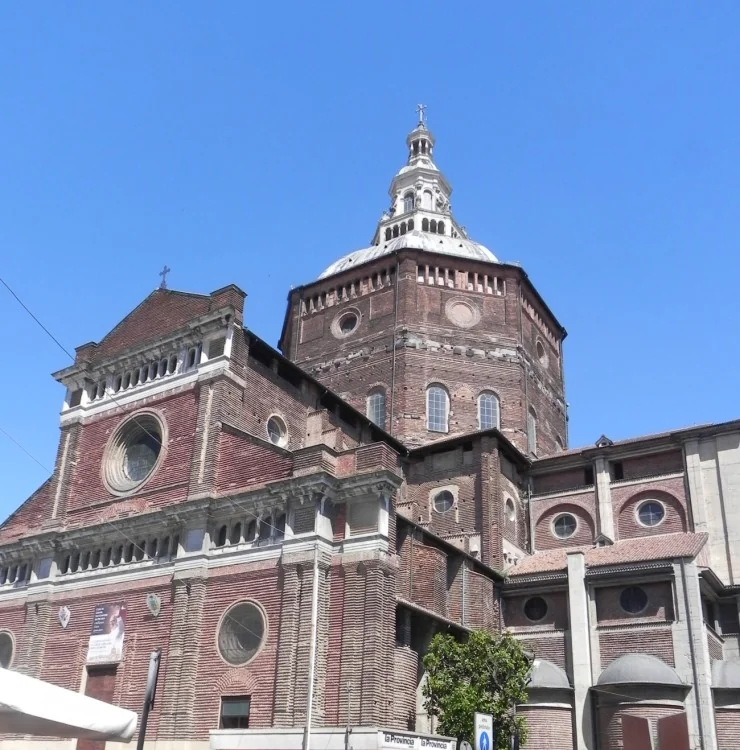
The stages of construction
1488
The foundation stone
On 29 June, work begins on a new Cathedral to replace Santo Stefano and Santa Maria del Popolo. The old basilicas are gradually demolished as construction advances.
16th–18th centuries
The body of the building
Construction progresses in stages, with periods of activity and interruption. Structures develop around the great central space; the drum of the dome is raised in the eighteenth century.
19th century
The dome and façade
The dome and façade, associated with the work of Carlo Maciachini, give the Cathedral a defining part of its profile. The long-standing Renaissance design meets the possibilities of a new century.
1930–1933
The transept arms
The construction of the transepts marks a further stage in shaping the building. The form we recognise today brings together parts made in very different periods.
A project for the city
The new Cathedral grew from an initiative linking Pavia’s religious and civic life. In 1487, citizens appealed to Cardinal Ascanio Maria Sforza; the following year, representatives of the Fabbriceria took the project to Milan.
Cristoforo Rocchi, Giovanni Antonio Amadeo and Donato Bramante contributed to the early stages of its design. The story involves different hands and changing ideas, as an architectural vision encountered the practical realities of building.
The design before the building
The Cathedral’s wooden model makes the ambition of its Renaissance project visible. It belongs to the Fabbriceria and is held at Pavia’s Civic Museums. During construction, it served as a reference for the craftspeople working on the building.
It also allows us to compare the design with the structure that was built, and to understand how a construction project could span generations.
From construction to conservation
Understanding the Cathedral’s successive phases helps us recognise both its unity and its differences. Materials, forms and building methods tell the long story of the Cathedral works.
The Fabbriceria safeguards this inheritance through conservation and by sharing its significance. The building’s history is therefore also part of the knowledge on which its continuing care depends.